

Why Vulnerable Children in Benin Face Multiple Risks at Once — Not Just One
- Myrese /
- January 22, 2026
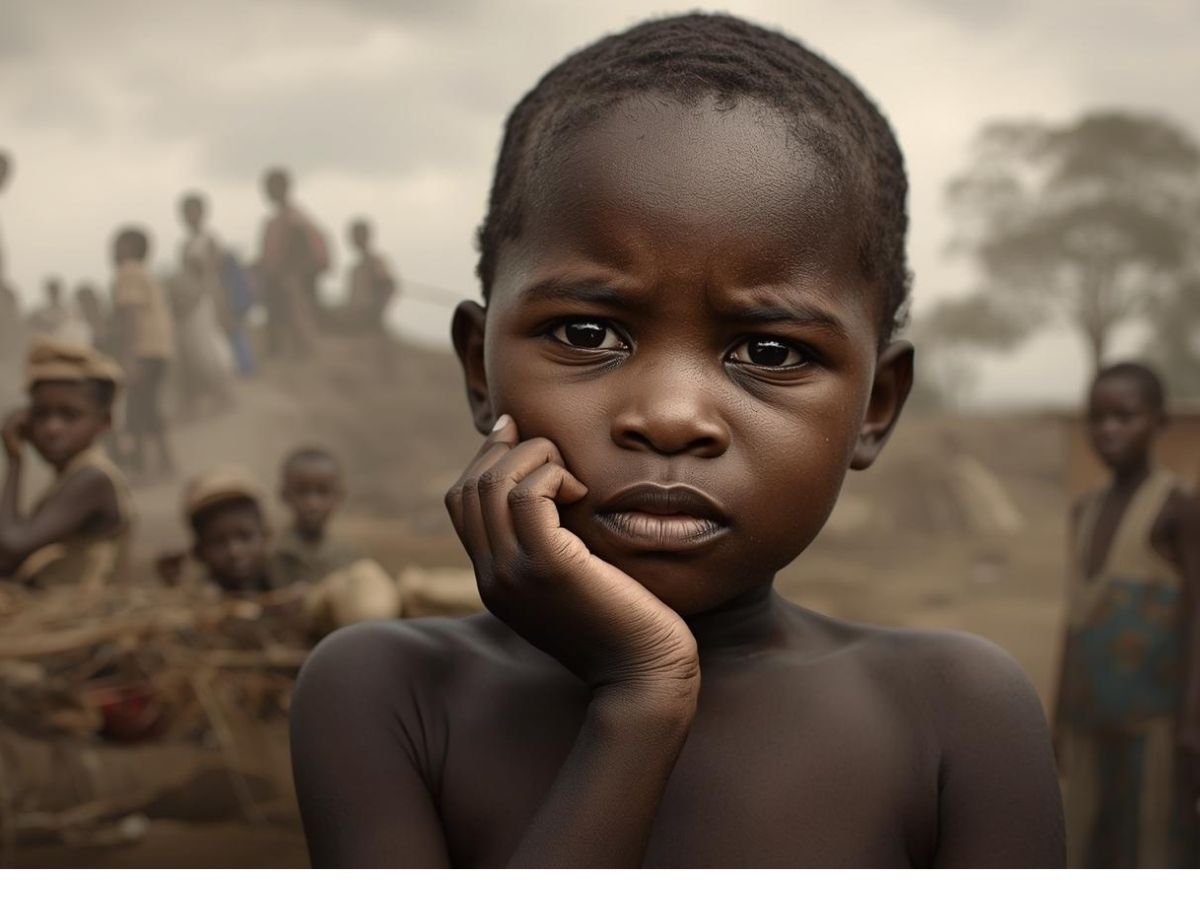
When vulnerability is discussed, it is often simplified into a single issue — hunger, lack of education, unsafe water, or limited healthcare.
However, global child-development research shows that children rarely experience deprivation in isolation. For vulnerable children in Benin, risk is multi-dimensional, where one deprivation reinforces another, creating a cycle that is far harder to escape.
Why Vulnerable Children in Benin Face Multiple Risks at Once — Not Just One
When vulnerability is discussed, it is often simplified into a single issue — hunger, lack of education, unsafe water, or limited healthcare.
However, global child-development research shows that children rarely experience deprivation in isolation. For vulnerable children in Benin, risk is multi-dimensional, where one deprivation reinforces another, creating a cycle that is far harder to escape.

According to the UNICEF–World Bank Multidimensional Poverty Framework, a child is considered severely deprived when they lack two or more basic needs simultaneously. In West Africa, a majority of vulnerable children fall into this category, meaning their challenges are layered, not singular.
Vulnerability Is Cumulative, Not Isolated
The World Bank’s Multidimensional Poverty Index (MPI) indicates that in Sub-Saharan Africa, over 55% of children experience multiple overlapping deprivations, commonly across nutrition, education, healthcare, and clean water.
This matters because when risks overlap, their impact is not additive — it is exponential.
For example:
- Malnutrition weakens immunity
- Weak immunity increases illness
- Illness reduces school attendance
- Missed schooling lowers lifetime income potential
- Lower income reinforces intergenerational poverty
Once this cycle begins, it rarely corrects itself without integrated intervention.
Nutrition: More Than Hunger — A Foundation for Cognitive Growth
The World Health Organization (WHO) reports that chronic undernutrition in early childhood can permanently impair brain development, reducing learning capacity and cognitive performance.
Globally:
- Children affected by stunting are up to 40% more likely to perform poorly in school
- Early malnutrition can reduce adult earning potential by up to 20%
In Benin and similar regions, nutritional deprivation is not a standalone problem — it directly undermines education outcomes and long-term productivity.
Without nutritional stability, educational investment alone cannot succeed.
Health Access: The Hidden Gatekeeper of Education
Health and education are deeply interconnected.
The World Bank notes that children who experience repeated untreated illnesses are significantly more likely to:
- Miss school days
- Drop out early
- Fail to meet basic literacy benchmarks
UNICEF data shows that preventable illnesses account for millions of lost school days each year across low-resource regions. In practical terms, a child who is frequently sick is a child who cannot maintain educational continuity.
Healthcare access, therefore, is not only about survival — it is a critical enabler of learning.
Education Interruptions Have Long-Term Economic Consequences
Education loss has compounding effects.
According to UNESCO, missing just one year of quality schooling can reduce a child’s future income by 9–10%.
For vulnerable children, interruptions are rarely temporary.
Once a child falls behind due to illness, hunger, or water-related responsibilities, re-entry into the education system becomes increasingly difficult.
This is why education gaps often persist across generations, reinforcing poverty rather than breaking it.
Clean Water: The Most Underestimated Risk Multiplier
Clean water access influences health, education, and time use simultaneously.
UNICEF and WHO joint studies show that:
- Children in water-scarce communities can spend up to 3–4 hours per day collecting water
- Girls are disproportionately affected, leading to higher school absenteeism
- Unsafe water contributes significantly to repeated infections, worsening malnutrition
Unsafe water does not just cause disease — it steals time, dignity, and opportunity.
Why Single-Issue Solutions Fail
Evidence from global development programs consistently shows that single-focus interventions deliver limited impact.
Examples:
- Education without nutrition → poor learning outcomes
- Healthcare without clean water → recurring illness
- Food support without education → short-term relief, no long-term stability
The World Bank and UNICEF both emphasize that integrated child-focused approaches produce significantly better outcomes in resilience, school retention, and long-term wellbeing.
The Cost of Inaction Is Higher Than the Cost of Prevention
Delayed or fragmented support leads to:
- Higher emergency healthcare costs
- Increased school dropout rates
- Lower adult productivity
- Greater dependency on aid systems
Preventive, integrated interventions are consistently shown to be more cost-effective than crisis response.
In simple terms: ignoring interconnected risks does not save money — it multiplies future cost.
Conclusion: Supporting the Whole Child, Not Just One Need
Vulnerable children in Benin do not live fragmented lives. Their challenges are interconnected, and effective support must be the same.
This is why Caroline Agnes Corp adopts a holistic approach — addressing nutrition, healthcare, education, and clean water together, ensuring progress in one area strengthens outcomes in the others.
When risks are addressed collectively, children do not merely survive — they gain stability, resilience, and a realistic path toward a better future.